
Check every room for damp and mould
Room by Room is our free damp and mould check. Walk round the building a room at a time on your phone, answer the checks, add photos and get a dated PDF report by email.
Free. No account and no app to install. Works anywhere in the UK.
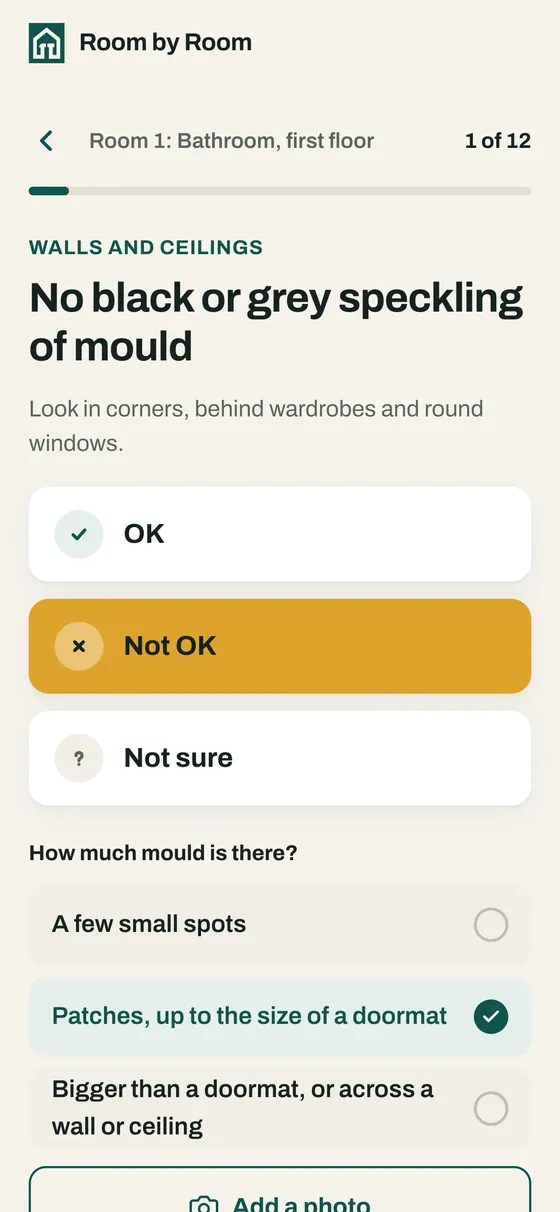
Mould is easiest to fix while it is small
Mould needs moisture, and the moisture nearly always comes from somewhere you can find: a slow leak, a blocked gutter, a fan that has stopped pulling air, a room that cannot get rid of the steam from cooking and washing. Caught early, most of those are a small repair.
Left alone, the same patch spreads behind furniture, comes back after cleaning and starts to affect the health of the people living with it. The difference is usually how soon somebody noticed and wrote it down. Our page on damp and mould repairs explains where the water tends to come from.
Who has to act, and how fast
In England, Awaab’s Law has applied to social landlords since 27 October 2025. Where a significant damp and mould hazard is reported, the landlord must investigate within 10 working days, give the tenant a written summary within 3 working days of finishing that investigation, and carry out relevant safety work within 5 working days of it concluding. Emergency hazards have to be investigated and made safe within 24 hours. From 30 November 2026 a second phase brings a wider set of hazards under the same deadlines.
Private landlords in England are not covered by Awaab’s Law yet, although the Renters’ Rights Act 2025 gives the government the power to extend it. They already have duties: damp and mould growth is a hazard under the Housing Health and Safety Rating System, and the Homes (Fitness for Human Habitation) Act 2018 requires a rented home to be fit to live in.
In Scotland, from 6 October 2026, social and private landlords must have a competent person investigate reports of damp or mould within 10 working days of becoming aware of them.
Room by Room gives you a dated record of what you saw, room by room. It does not make a home safe or meet a legal duty on its own, and it does not replace an investigation by a competent person. This is a plain summary, not legal advice.
What a damp and mould plan usually covers
Most landlords and housing providers now write down how they deal with damp and mould, often called a damp and mould management plan or policy. They vary, but most cover the same ground.
- How residents and staff report damp and mould, and how quickly a report is logged
- Who investigates, how soon, and how they find the cause rather than only the mould
- How each report, visit and repair is recorded, with dates and photographs
- Regular checks of every home or building, so problems are found before anyone has to report them
- A follow up check after a repair, to confirm it has worked
- Keeping residents informed at each step, in writing
The monthly check is the regular checks part. Each report is dated, room by room, with photos, so it slots into your records alongside reports, visits and repairs. Our printable damp and mould checklist covers the same points on paper.
Your plan should follow the law and guidance that apply to you, and the regulator or ombudsman for your sector. This is a plain summary, not legal advice.
The right checks for each room
Room by Room follows our printable checklist. You pick each room and answer the checks that fit it, so the fan and sealant questions only come up in kitchens and bathrooms. The outside of the building is checked once.
Walls and ceilings
5 checks- 1Black or grey speckling in corners, behind furniture and around windows
- 2Brown rings or tide marks on the ceiling
- 3Peeling paint, bubbling plaster or lifting wallpaper
- 4White powdery salts low down on the walls
- 5A musty smell, or walls cold and damp to the touch
Outside, once
4 checks- 12Air bricks and vents kept clear, not blocked by ivy or bins
- 13Overflow pipes dripping
- 14Gutters and downpipes spilling down the wall
- 15Cracked render or missing pointing where walls are wet
Windows and air
4 checks- 6Heavy condensation, or water pooling on the sills
- 7Mould on window seals, frames or reveals
- 8Trickle vents open and not painted shut
- 9Extractor fan running and pulling air
The fan check comes up in kitchens and bathrooms only.
Water
2 checks- 10Drips or staining under sinks, toilets and machines
- 11Cracked or blackened sealant around baths and showers
Asked in kitchens and bathrooms. Drips are also checked in utility and plant rooms.
Since last time
1 check- 16Anything back or spreading since the last check, in every room and outside
- +How much mould you saw, from none to bigger than a doormat
- +A humidity reading, if you have a meter to hand
- +Your photos and notes, with the date and room added Done for you
Room by room on your phone, with a dated PDF report by email and nothing to install.
Start the free checkIt looks at walls, not at how people live
The check asks nothing about who lives in a home, their health or their habits. It looks for where moisture is getting in and whether it can get out. The Housing Ombudsman has criticised landlords for blaming damp and mould on residents’ lifestyle rather than finding the cause, and a check that only looks at the building keeps the record on the right footing.
Please photograph the problem, never people.
A report you can file or forward
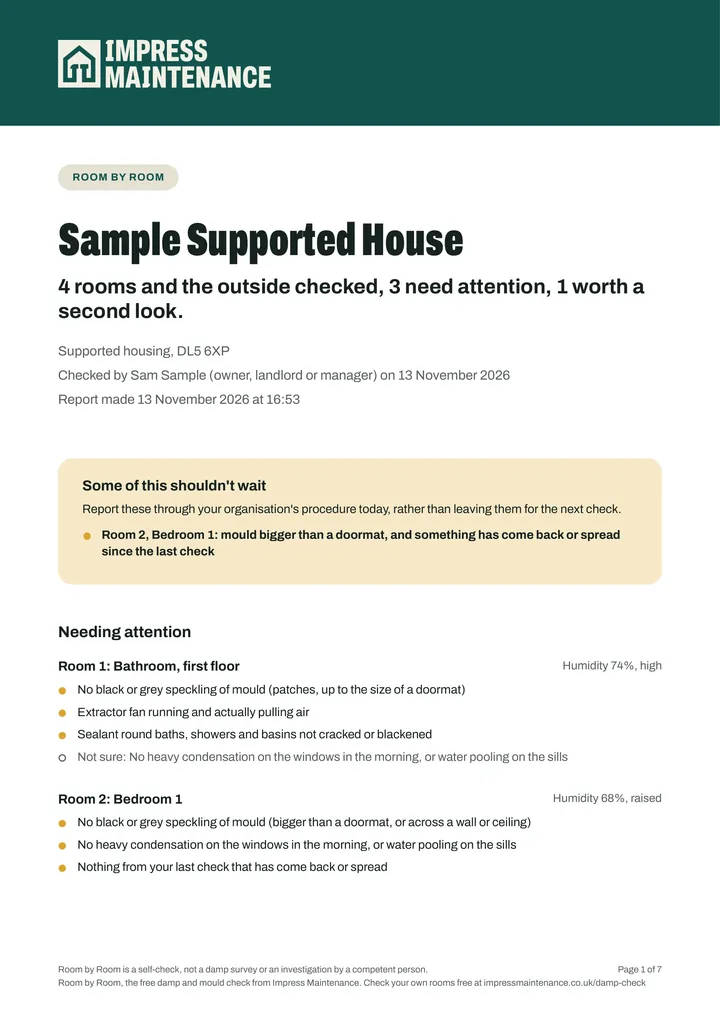
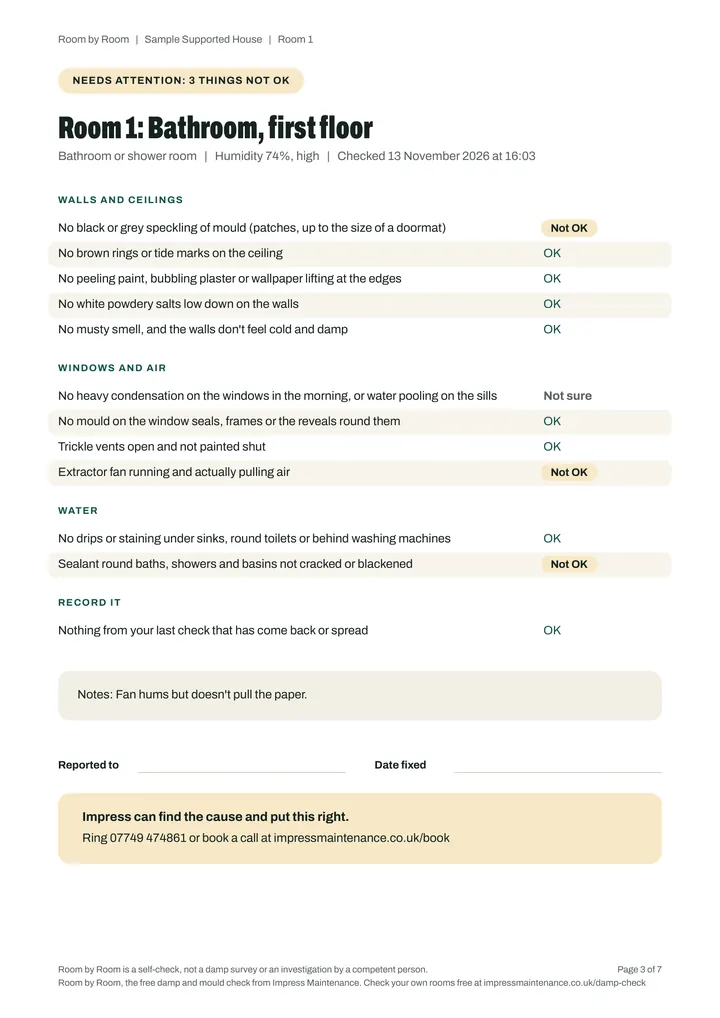
- A dated PDF report by email, with every room, every answer, your notes and photos
- Anything that should not wait put first: mould bigger than a doormat, or something back or spreading since last time
- If you own or manage the building, what to do next and who to ring
- If you live there, a report written for you to send to your landlord or housing provider
If you want, tick the box for one reminder email about three months later to check again. It is off unless you choose it, and one click cancels it.
Three steps
- 9:41
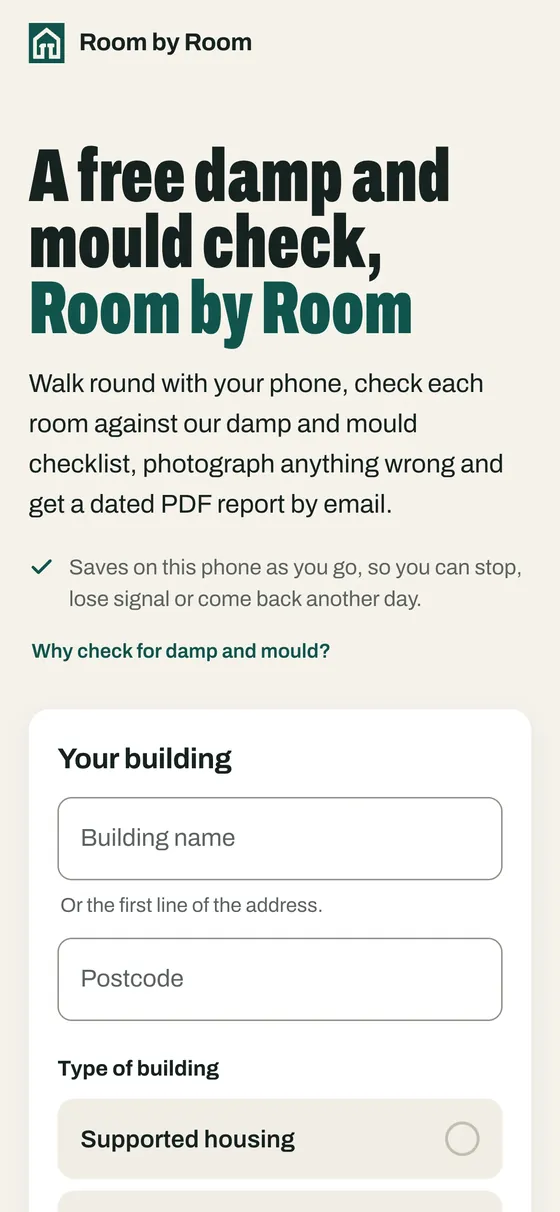
Add a building
Name the building, pick its type, add the postcode and say who you are.
- 9:41
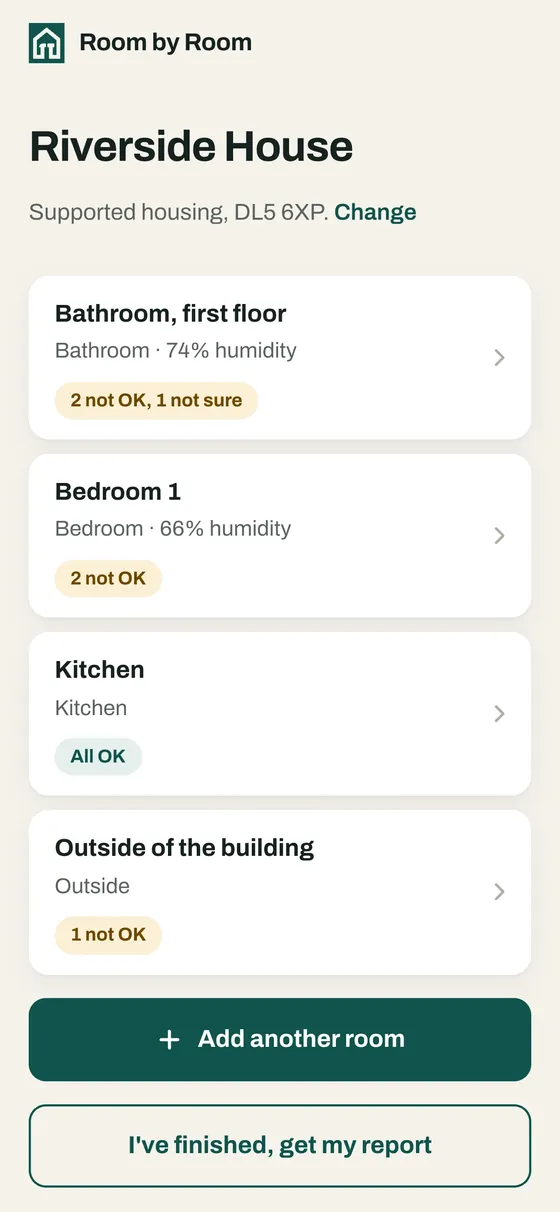
Check each room
Answer the checks in each room, and add a photo for anything you find.
- 9:41
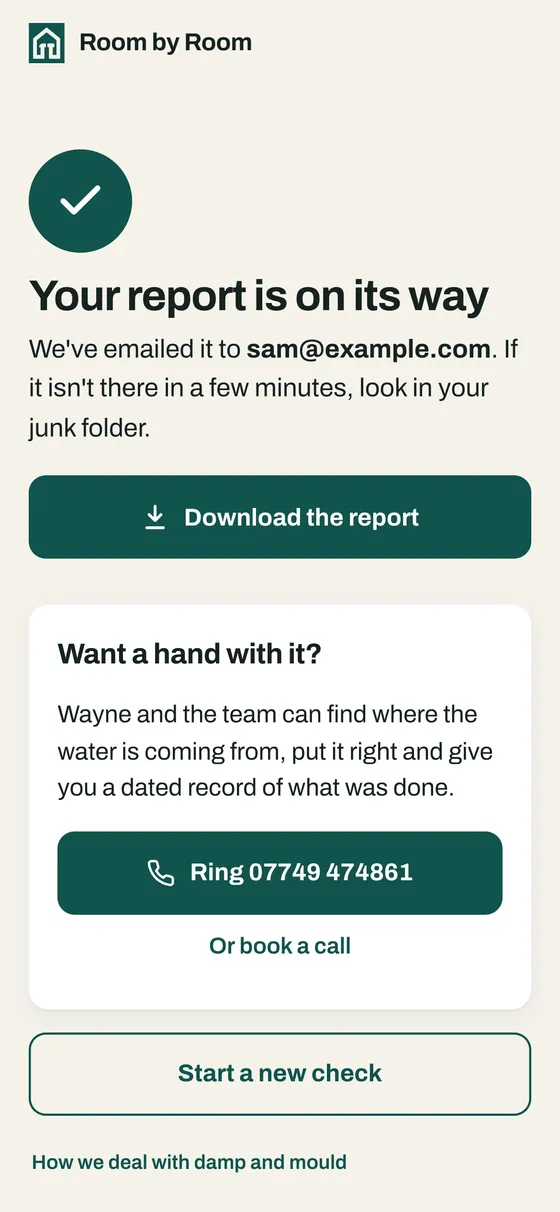
Get the report
Press Email me the report, and your dated PDF arrives in your inbox.
It saves on your phone as you go, so you can stop, lose signal or come back another day.
Finish within a week, because some phones clear what a page has saved after seven days without a visit.
What we fix, and what we do not
Impress Maintenance in Newton Aycliffe finds the cause and puts it right: leaks, gutters and downpipes, failed sealant, blocked vents, mould treatment and making good. Where a fan needs fitting or wiring, we arrange a registered electrician. Damp and mould was part of 23 jobs we invoiced to IKE Supported Housing over two years, in homes people live in.
We do not do damp proofing, which means no injected damp courses, tanking, membranes or timber treatment. If a building needs that, or a survey from a qualified surveyor, we will say so. We work across County Durham, Teesside and Tyne and Wear. Everywhere else, the report tells you to take it to a local property maintenance firm.
Before you start
Is this a damp survey?
No. Room by Room is a self check for whoever looks after the building. It gives you a dated record of what you saw in each room, but it does not replace an investigation by a competent person, a damp survey or your own procedures.
Is it really free?
Yes. There is no charge and nothing to sign up to. If something needs work and the building is in our area, the report gives our number, and it is up to you whether to ring.
I rent my home. Can I use it?
Yes. Tell the check you live there and the report is written for you to send to your landlord or housing provider, with your photos and dates. We do not try to sell you anything.
Does it ask about the people who live there?
No. It looks at the building only: the walls, the windows, the air and the water. It asks nothing about residents, their health or how they live.
What happens to my details?
We use them to make and send your report and to keep a record of your check. We only contact you about what you found if you tick the box to say we can. Photos and our copy of the report are deleted after 6 months, and the rest after 12 months unless the check becomes work. Our privacy notice has the full details.
How often should I check?
Once a month is a good rhythm for most buildings, and straight after a repair to see whether it has worked. Your own damp and mould policy may set a different interval.